Semantic HTML
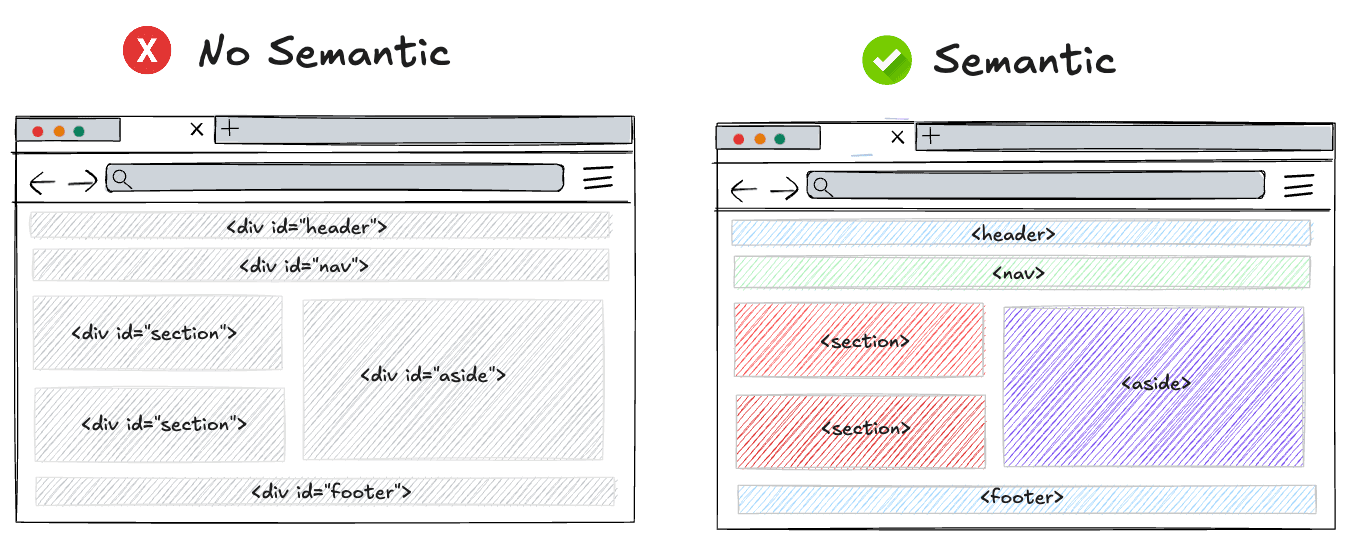
Semantic HTML refers to the use of HTML tags that give meaning to web page structure, helping both browsers and assistive devices understand the content and structure of a website. The use of semantic elements improves accessibility, indexing by search engines and code maintenance
Non-Semantic VS Semantic HTML
The main difference between non-semantic and semantic HTML is that semantic HTML uses elements that explicitly describe their content and function in the page structure, improving accessibility, SEO, and site maintenance. Elements such as <article>, <nav>, and <section>clearly inform about the type of information they contain, helping both users and assistive technologies.
On the other hand, non-semantic HTML, using elements like <div> and <span>, does not offer this level of clarity, making the page more difficult for screen readers and search engines to interpret, and potentially more complicated to maintain.